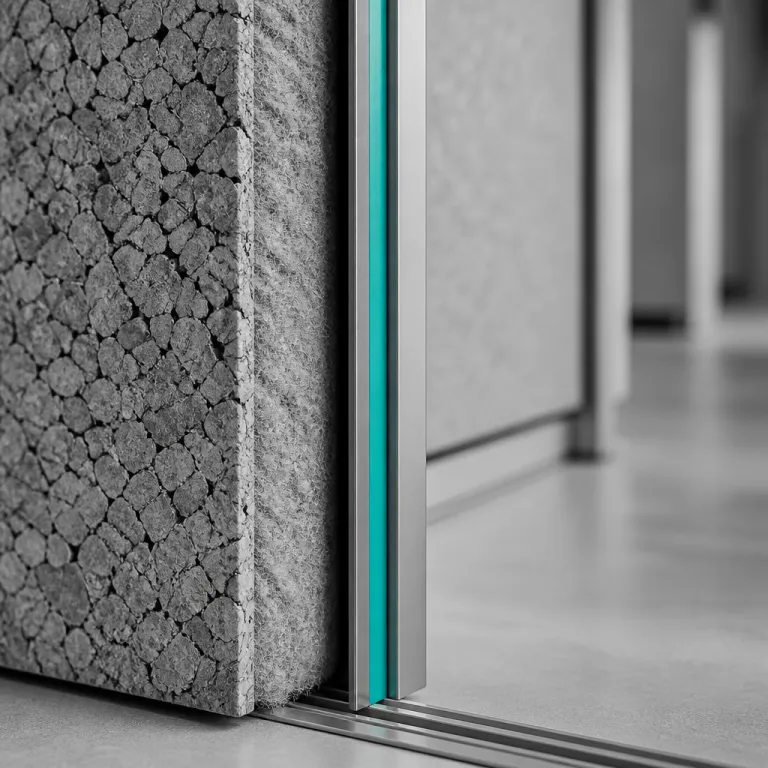
Why movable walls matter for workplace culture and corporate responsibility
Real-world movable wall projects that document environmental gains show how physical environments shape culture in concrete ways. When an organisation replaces fixed drywall with a flexible partition system, it signals adaptability, transparency and respect for employee needs, which are core elements of genuine corporate social responsibility. In many offices, these reconfigurable partitions also become visible proof that leadership is serious about cutting environmental impact while improving daily work life.
In practice, architectural walls influence how people collaborate, how they feel heard and how they perceive the company’s values. A well planned wall installation can turn anonymous open plan floors into human scale office spaces, with demountable walls and glass walls that balance privacy and connection for different teams. These demountable architectural systems help translate CSR commitments into tangible office partitions that employees can see, use and evaluate every day.
From an engagement perspective, movable walls and modular panels give teams more control over their space. Employees can reconfigure meeting rooms, office walls and partition walls to support project work, quiet focus or hybrid collaboration, which strengthens their sense of autonomy and trust. As one project manager in a recent retrofit said, “When we can slide a wall and instantly create a quiet room, it feels like the space finally works for us, not the other way around.” When companies share data about the environmental benefits of these partition systems, such as reduced waste from demountable walls and lower energy use thanks to natural light, they reinforce a culture of transparency and shared responsibility.
Environmental benefits of movable wall systems in modern offices
Across many offices, documented projects on flexible partitions and sustainability highlight three recurring gains: lower embodied carbon, less construction waste and better energy efficiency. Because a movable wall and its panels are demountable, companies can adapt office space without repeated drywall demolition, which significantly reduces debris sent to landfill over the life of a lease. When architectural walls are designed as modular systems, they can be relocated between offices or floors, extending product life and improving ROI on every wall installation.
Glass walls and sliding partitions also support environmental goals by maximising natural light penetration. Instead of deep, artificially lit spaces, demountable walls with glazed panels allow daylight to reach interior office partitions and meeting rooms, which can cut lighting energy use while improving employee well being. In several published examples of sustainable office refurbishments, companies report that staff in light filled spaces show higher satisfaction scores and lower absenteeism, linking environmental design directly to engagement (World Green Building Council, 2014).
Acoustic performance is another environmental and human factor often underestimated in open plan offices. High quality operable partition systems and sliding folding panels can create quiet zones without building permanent partition walls, reducing the need for noisy mechanical equipment like white noise generators. For organisations benchmarking the best nonprofits to work for, such as those analysed in this in depth review of mission driven employers, these flexible wall systems offer a practical way to align sustainable building choices with employee centric culture.
From open plan stress to flexible spaces that support engagement
Many knowledge workers report that fully open plan offices increase stress, distractions and perceived unfairness. Studies of office redesigns that introduce demountable walls and acoustic partition systems show that noise complaints fall while collaboration remains strong, which directly supports employee engagement (Leesman, 2023). When a movable wall divides a large floor into smaller spaces, people gain more control over their environment and feel that leadership respects their concentration and wellbeing.
Flexible design using modular panels and sliding partitions allows organisations to create a spectrum of spaces: quiet focus rooms, project studios, informal lounges and formal meeting rooms. Instead of one monolithic office space, demountable architectural systems enable a nuanced mix of office walls and glass walls that can evolve with changing teams and projects. This adaptability is especially valuable for CSR initiatives, where cross functional groups often need temporary project spaces that can be reconfigured once campaigns or community programmes end.
Companies that treat CSR as a driver of culture often pair these physical changes with policy shifts. They may, for example, link their movable walls investments to broader commitments described in this analysis of enhancing employee engagement through corporate social responsibility, ensuring that wall systems, office partitions and partition walls support volunteering days, stakeholder workshops and inclusive town halls. In such environments, sustainable fit out projects become stories employees share with pride, reinforcing a sense of shared purpose and collective impact.
Case study patterns : how movable walls support CSR in practice
Across sectors, evidence from corporate fit outs and green building certifications reveals consistent patterns that other organisations can replicate. First, firms that adopt demountable walls and modular wall systems usually start with a pilot floor, measuring acoustic performance, energy use and employee feedback before scaling the wall installation. This disciplined approach generates data that connect flexible design choices to measurable CSR outcomes, such as reduced material waste and higher engagement scores.
Second, the most effective projects treat movable walls as part of a broader architectural walls strategy, not as isolated products. They combine glass walls, sliding folding partitions and operable partition systems to create layered spaces that support both focus and collaboration, while maximising natural light across offices. Over time, these demountable architectural solutions allow companies to adjust office space layouts as headcount, hybrid work patterns and community partnerships evolve, without repeated disruptive construction.
Third, successful organisations communicate clearly about why they chose movable wall systems and how these partitions align with CSR goals. They explain how modular panels reduce long term cost, how partition walls can be reused in new offices and how office walls with high acoustic performance support mental health. One technology company in London, for example, reported a 35 percent drop in noise related complaints and a 12 percent increase in self reported focus scores six months after installing movable partitions on two pilot floors (internal post-occupancy survey, 2022). A financial services firm in Toronto documented a 28 percent reduction in fit out waste and a 9 percent improvement in employee engagement scores after replacing fixed drywall with demountable partitions during a major consolidation (CSR report, 2021). When leaders link these choices to broader cultural shifts, such as those described in this analysis of how changes in leadership reshape workplace culture and engagement, employees are more likely to see movable walls as part of a credible, values driven strategy.
Designing architectural walls that reflect ethical and environmental values
For CSR focused organisations, the design of walls is never just an aesthetic decision. Workplace research on sustainable interiors demonstrates that every movable wall, panel and partition system can either reinforce or undermine stated values about inclusion, sustainability and respect. When office partitions are opaque, rigid and poorly planned, they can signal hierarchy and exclusion, even if the company’s CSR report says otherwise.
By contrast, demountable walls with glass panels and carefully tuned acoustic performance can express openness while still protecting confidentiality and focus. Architectural walls that channel natural light deep into office space reduce reliance on artificial lighting, which supports both environmental targets and employee wellbeing. Sliding partitions and operable partition systems make it easier to host community events, stakeholder dialogues and employee resource group meetings, turning offices into adaptable spaces for social impact activities.
Design teams should involve employees early when specifying wall systems, wall installation methods and future reconfiguration scenarios. Asking teams how they use meeting rooms, open plan zones and quiet areas helps ensure that movable walls and partition walls reflect real work patterns rather than abstract design trends. Over time, this participatory approach builds trust, because staff can see that demountable architectural solutions are chosen not only for cost and flexibility, but also for their contribution to culture, CSR and environmental stewardship.
Measuring engagement and environmental impact in reconfigurable offices
To move beyond slogans, organisations need clear metrics that link flexible wall strategies and environmental performance to employee engagement outcomes. Facilities and HR teams can track indicators such as noise complaints, meeting room utilisation, perceived control over space and satisfaction with natural light before and after wall installation. When these data are combined with environmental metrics like reduced construction waste from demountable walls and lower energy use in glass walled offices, leaders gain a holistic view of impact.
Partition systems and modular wall systems also make it easier to run controlled experiments. One floor might use more open plan layouts with limited office walls, while another relies on a higher density of movable walls, partition walls and sliding folding panels to create varied spaces. Comparing engagement surveys, retention rates and CSR participation across these offices can reveal which combinations of architectural walls, operable partition systems and office partitions best support both wellbeing and sustainability.
Over time, organisations can build an internal library of workplace transformation case studies, documenting how each movable wall configuration affected culture, collaboration and environmental KPIs. One financial services firm, for instance, recorded a 28 percent reduction in fit out waste and a 9 percent improvement in employee engagement scores after replacing fixed drywall with demountable partitions during a major consolidation (CSR report, 2021). Sharing these results transparently with teams reinforces trust and shows that leadership treats office space as a strategic lever for CSR, not just a cost centre. When employees see that their feedback directly shapes future wall systems and demountable architectural choices, they are more likely to feel valued, engaged and aligned with the company’s mission.
Key statistics on movable walls, CSR and employee engagement
- A study by the World Green Building Council on health, wellbeing and productivity in offices reported that green buildings, including those using demountable walls and high performance glass walls, can reduce operational carbon emissions by up to 40 percent compared with conventional buildings, which strengthens the environmental case for movable wall systems (World Green Building Council, 2014).
- Research from the Leesman Index on workplace effectiveness found that employees who rate their workplace highly for variety of spaces, including flexible meeting rooms and modular office partitions, are more than twice as likely to report high personal productivity than those in uniform open plan offices (Leesman, 2023).
- Data from the International WELL Building Institute show that access to natural light and views can improve self reported wellbeing by over 15 percent, which supports the use of glass partitions and architectural walls that maximise daylight in office space (International WELL Building Institute, 2020).
- A survey by the Chartered Institute of Personnel and Development on responsible business practices showed that organisations with strong CSR programmes and visible environmental initiatives, such as using demountable architectural systems to cut waste, are significantly more likely to report above average employee engagement scores (CIPD, 2022).
- Analysis by the Urban Land Institute on adaptable workplaces found that flexible office walls and partition systems can reduce churn related fit out costs by 10 to 20 percent over a typical lease, freeing budget for further CSR and employee experience investments (Urban Land Institute, 2018).
FAQ about movable walls, environmental benefits and workplace culture
How do movable wall systems support corporate social responsibility ?
Movable wall systems support CSR by reducing construction waste, extending product life and enabling offices to adapt without repeated demolition. Demountable walls and modular panels can be reused when layouts change, which lowers embodied carbon and landfill impact. These visible environmental benefits also help employees see that the organisation’s CSR commitments are backed by concrete actions in their daily workspace.
Can movable walls really improve employee engagement in open plan offices ?
Yes, when used thoughtfully, movable walls can transform open plan offices into more supportive environments. By combining operable partition systems, acoustic panels and glass partitions, companies can create a mix of quiet rooms, collaboration zones and informal spaces that match different work styles. This sense of choice and control over space is strongly linked to higher engagement and perceived fairness.
What environmental advantages do glass walls and partitions offer ?
Glass walls and partitions allow natural light to penetrate deeper into office space, which can reduce reliance on artificial lighting and lower energy use. When paired with high performance glazing and well designed architectural walls, they also help maintain thermal comfort and acoustic performance. These features contribute to both environmental targets and healthier, more pleasant workplaces.
Are demountable architectural walls more expensive than traditional construction ?
Initial costs for demountable architectural walls can be higher than basic drywall, but lifecycle costs are often lower. Because wall systems are reusable and reconfigurable, organisations avoid repeated demolition, reconstruction and downtime when layouts change. Over a full lease term, many documented office retrofits show net savings alongside reduced environmental impact.
How should companies measure the impact of movable walls on culture ?
Companies should combine quantitative and qualitative measures when assessing cultural impact. Surveys can track perceived noise levels, access to suitable spaces, sense of autonomy and satisfaction with natural light before and after wall installation. Focus groups and interviews then add nuance, revealing how specific partition walls, meeting rooms and flexible spaces influence collaboration, trust and alignment with CSR values.
