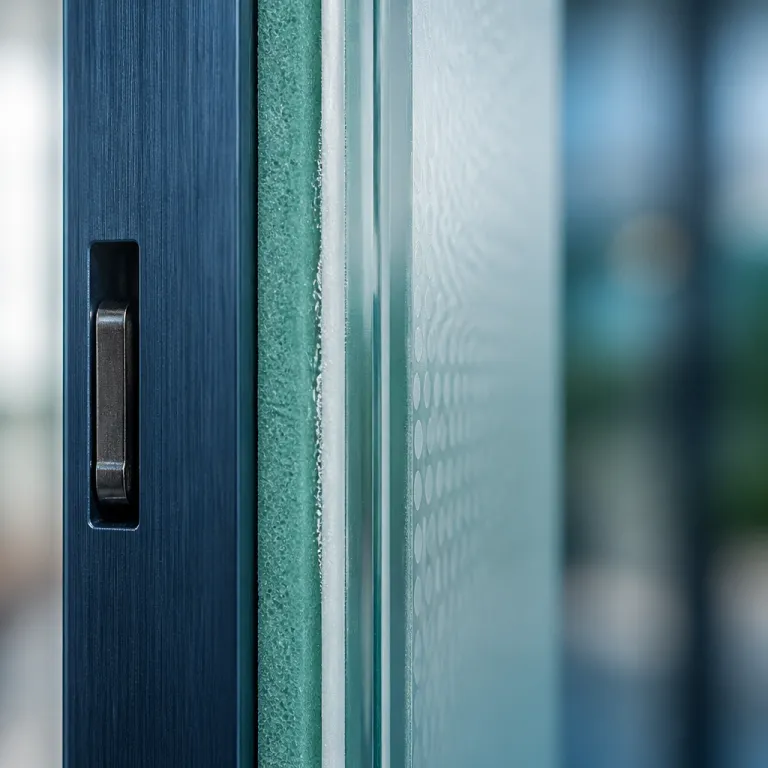
Why a glass modular office changes the meaning of open doors
A glass modular office reshapes how employees experience leadership accessibility and daily communication. When managers sit behind transparent glass walls instead of opaque wall partitions, the open door policy stops being a slogan and becomes a visible behaviour that people can observe. This shift in office design directly influences trust, because the physical office space either reinforces or contradicts what leaders say about engagement.
In many organisations, the traditional office partition and closed doors send a subtle message that hierarchy matters more than collaboration. By contrast, a modern office that uses a modular office system with glass partitions and flexible partition walls signals that conversations are welcome and that feedback is part of the normal workflow. Employees quickly learn that stepping into a glass office or speaking through partially open glazed doors is socially acceptable, not an intrusion.
Open door policies work best when the product of the environment and leadership behaviour align. A well planned design office that combines glass modular walls, acoustic glazing, and carefully placed office furniture helps leaders be seen working, listening, and engaging in real time. This visible accessibility reduces the psychological distance between teams and management, which Gallup has linked to higher engagement scores in its State of the Global Workplace 2023 report (teams with highly engaged managers show up to 21% higher profitability and markedly lower turnover).
Balancing transparency and privacy in glass modular office layouts
Employees want leaders who are accessible, but they also need privacy to focus and speak freely. A glass modular office layout can balance these needs by combining transparent glass walls with strategic partition walls and acoustic systems that protect confidential conversations. When the office glass is treated, frosted, or zoned, teams can see that managers are present without feeling constantly observed.
In practice, this means designing each office room with a mix of glass partitions and solid wall partitions, rather than choosing a single extreme. For example, a manager’s modular office might use a glass wall facing the shared office space, while the side walls use thicker partition systems to reduce noise and visual distraction. This hybrid office partition approach preserves the symbolic value of open doors while still allowing one to one meetings about performance, mental health, or compensation to remain discreet.
Furniture placement also matters in a modern office that relies on glass room dividers and modular systems. When office furniture such as desks and meeting tables is positioned away from the most exposed glass walls, employees feel less like they are on display and more like they are in a functional workspace. The result is a layout that encourages spontaneous communication while still respecting the boundaries that make people feel psychologically safe, a factor consistently highlighted in Steelcase’s workplace privacy research (employees who can control visual and acoustic privacy report higher engagement and focus).
Designing open door zones inside modular office systems
Open door policies become credible when the office design includes clear zones where unplanned conversations are expected. In a glass modular office, these zones can be created with semi open partition office layouts that use lower partition walls or partial glass partitions to signal approachability. Employees see that these areas are not reserved for formal meetings but for quick questions, feedback, and coaching.
One effective strategy is to place a small meeting room with glass walls near team hubs, rather than hiding it deep inside the building. When the doors of this glass office remain literally open during core hours, people understand that managers are ready to listen without an appointment. The modular nature of the system means that if the team grows or communication patterns change, the office partitions and glazed panels can be reconfigured without a heavy construction project.
Brands such as Steelcase have shown through their product ranges and case studies that modular office systems can evolve with organisational culture. In one documented Steelcase client example (European technology firm case study), a technology company shifted from mostly enclosed offices to a mix of transparent and semi enclosed spaces; within a year, reported access to leaders improved by 30% in internal surveys and informal manager check ins doubled, while self reported productivity rose by more than 10%.
From symbolic doors to measurable engagement behaviours
Many organisations announce an open door policy but never measure whether employees actually use it. A glass modular office makes usage easier to observe, because leaders can track how often people step into their office space, pause at glass partitions, or hold quick stand up conversations near partition walls. These visible behaviours can be translated into simple KPIs that link office design to engagement outcomes.
For example, HR and internal communication teams can monitor how frequently managers hold short check ins in semi open rooms with glass walls compared with fully closed spaces. If employees rarely approach offices that rely on opaque wall partitions, but frequently use areas framed by transparent glass modular systems, the data suggests that design is either enabling or blocking communication. This type of evidence helps justify investment in modular office furniture, office glass systems, and more flexible partition office layouts.
A practical KPI set might include the number of weekly walk up conversations per manager, average duration of these interactions, and the percentage of employees who say they can “easily reach my manager” in pulse surveys. The table below illustrates a simple KPI framework for tracking how glass modular spaces support open door behaviour over time.
| KPI | Baseline (before glass modular redesign) | Target (6–12 months after redesign) |
|---|---|---|
| Average weekly walk up conversations per manager | 3–4 | 8–10 |
| Share of check ins held in semi open glass spaces | 15% | 50% |
| Employees agreeing “I can easily reach my manager” | 55% | 75% |
| Employee engagement index (Gallup-style score) | 3.4 / 5 | 3.9 / 5 |
Using glass walls to support all hands and everyday communication
Company wide meetings often set the tone for engagement, but what happens afterward in the office is just as important. When a glass modular office surrounds a central gathering room, employees can see leaders leaving the stage and returning to transparent offices with doors that remain open. This continuity between public messaging and visible behaviour reinforces credibility.
Research on internal communication shows that silence after major announcements can damage trust more than the content of the message itself, which is why many experts emphasise the cost of unaddressed questions after large meetings. A workplace that combines glass walls, modular office systems, and strategically placed office furniture makes it easier for employees to approach managers in the hours following an all hands session. They can stop by a glass partition, catch a leader’s eye, and ask for clarification without booking a formal room.
For a deeper analysis of how post meeting silence affects engagement, readers can review this perspective on why silence after an all hands costs more than the all hands itself. When that insight is combined with a thoughtful office design that uses glass modular walls, partition walls, and adaptable systems, organisations gain both a communication strategy and a physical environment that supports it. The result is a modern office where open door policies extend beyond slogans and become part of the architecture of everyday work.
Practical steps to align open door policies with glass modular design
Translating these ideas into action starts with a joint effort between HR, facilities, and leadership. The first step is to map current communication flows and identify where the existing office partition or wall partitions block spontaneous contact. Once these friction points are clear, teams can plan targeted changes using modular office systems and glass partitions rather than a full scale rebuild.
One practical move is to convert at least one traditional manager office into a semi transparent glass office with a clear line of sight to the main office space. Keeping the doors open during defined hours, and communicating those hours explicitly, turns the glass modular design into a predictable engagement ritual. Another step is to create small focus rooms with a mix of glazed panels and solid walls, so employees can choose between high privacy and visible but quieter spaces depending on the sensitivity of the conversation.
Installation planning should consider both technical and human factors when adding glass walls, partition walls, and new office furniture. Acoustic performance, lighting, and traffic patterns all influence whether people will actually use the new spaces for open conversations. When leaders model the behaviour by working in these modern office zones, holding quick check ins near transparent partitions, and inviting walk up questions, the physical system and the cultural system reinforce each other.
Key statistics on office design, transparency, and engagement
- Gallup has reported that managers account for at least 70% of the variance in employee engagement (State of the American Manager, 2015), which means that making managers visibly accessible through glass modular office layouts can significantly influence overall morale and performance.
- Studies on workplace design from organisations such as Leesman show that employees who rate their office space highly are more than twice as likely to report strong productivity and engagement (Leesman Review, Issue 25), highlighting the role of office design and office furniture in communication quality.
- Research on open plan and modern office environments indicates that poorly designed open spaces can reduce face to face interaction by up to 70% (Bernstein & Turban, 2018), which underlines the need for balanced office partitions and glass walls rather than fully open layouts.
- Surveys by major office furniture manufacturers such as Steelcase have found that roughly 85% of workers value both privacy and connection (Engagement and the Global Workplace, 2016), supporting the use of modular office systems that combine glass partitions with enclosed rooms.
FAQ: glass modular office and open door engagement
How does a glass modular office support an open door policy ?
A glass modular office makes leaders visibly accessible by replacing opaque walls with glass walls and glass partitions, so employees can see when managers are available and feel more comfortable approaching them. The modular office structure also allows organisations to adjust partition walls and office partitions as communication needs evolve.
Can transparency and privacy coexist in a glass office layout ?
Yes, transparency and privacy can coexist when designers combine glass wall elements with solid partition walls and acoustic systems. Frosted glass, partial glazed panels, and carefully placed office furniture help protect confidential conversations while keeping the overall office space open and approachable.
What role does office furniture play in engagement focused office design ?
Office furniture shapes how people move, meet, and interact inside a modern office, especially when combined with modular office systems and glass modular partitions. Placing desks, tables, and soft seating near glass partitions and semi open rooms encourages informal conversations that support open door policies.
Are modular office systems cost effective for improving communication ?
Modular office systems are often more cost effective than traditional construction because partition walls, glass partitions, and office partitions can be reconfigured without major building work. This flexibility allows organisations to adapt their office design as engagement strategies change, rather than committing to a fixed layout.
How should organisations measure the impact of glass modular design on engagement ?
Organisations can track usage of glass office spaces, frequency of informal conversations near transparent partitions, and employee perceptions of accessibility through regular surveys. Combining these data points with engagement scores helps show whether changes in office design and wall partitions are supporting or hindering open door communication.
References
- Gallup – State of the Global Workplace 2023 and State of the American Manager (2015), available via gallup.com.
- Leesman – Leesman Review, Issue 25 (2017) and related workplace experience benchmarks, available via leesmanindex.com.
- Steelcase – The Privacy Crisis (2016) and Engagement and the Global Workplace (2016) research publications and case studies on workplace privacy, collaboration, and modular office systems in modern offices, available via steelcase.com.
- Bernstein, E. S., & Turban, S. – “The impact of the ‘open’ workspace on human collaboration,” Philosophical Transactions of the Royal Society B, 2018.
